Legacy & potato history
Florian Lauer at 98: A Lifetime Devoted to Potatoes
A legacy of breeding, innovation, students, growers, and a passion that never really wavered
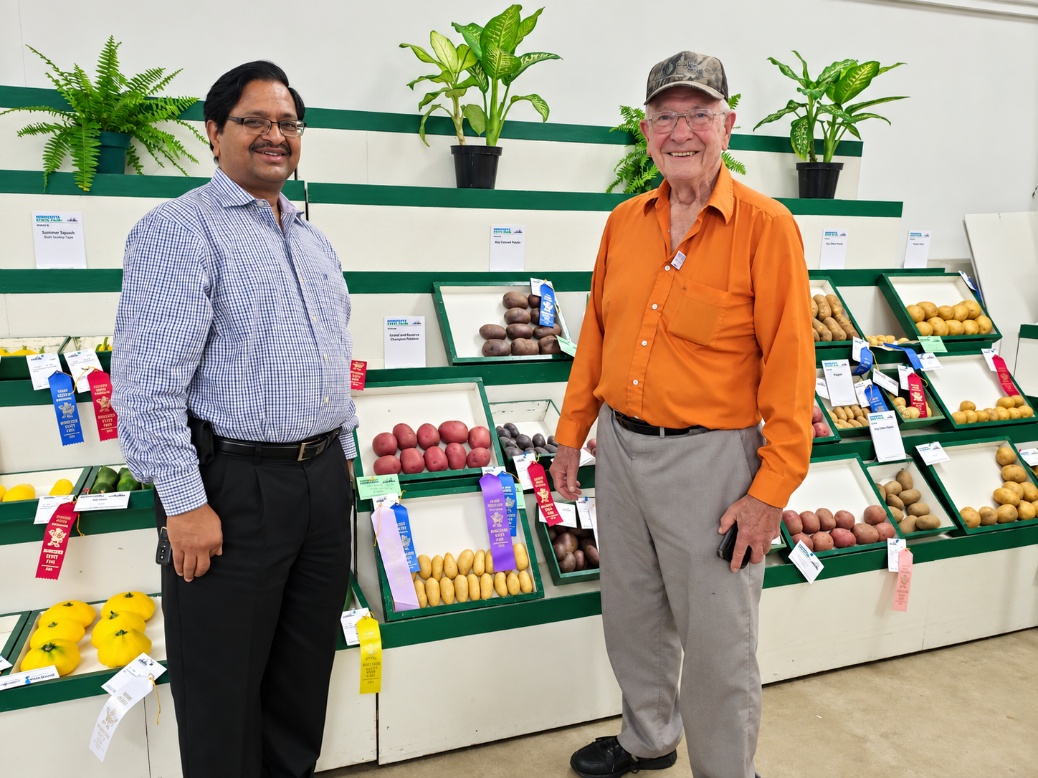
In September 2026, Dr. Florian I. Lauer celebrated his 98th birthday. For the potato community, the milestone is an occasion to look back on a career that helped shape modern potato research and breeding at the University of Minnesota and reached far beyond the campus.
Lauer’s work touched potato genetics, cultivar development, disease resistance, processing quality, exotic germplasm, tissue culture, seed production, teaching, and grower education. Florian’s influence is also found in the growers he helped, the students he trained, the germplasm and methods he left to succeeding breeders, and the relationships he built across generations of the potato industry. Even long after retirement, he remained interested enough to return to potato fields, examine experimental selections, and share the judgment developed over a lifetime.
Minnesota Roots and a Broad View of Plant Breeding
Florian was born on a farm near Farming, Minnesota, in September 1928. He earned his bachelor’s degree with distinction and received his doctorate in Horticulture and Plant Genetics from the University of Minnesota in 1957. His professional career remains closely tied to the University of Minnesota and its Department of Horticultural Science.
Potato breeding at Minnesota had a long history before Florian entered the field. Florian’s predecessor, Dr. Fred Krantz, helped spearhead the collection of tuber-bearing Solanum species that became part of the potato germplasm repository at Sturgeon Bay, Wisconsin. It would simply be impossible now due to intellectual property rights. Florian’s contribution was to push that tradition strongly toward genetics and genetic diversity. His research examined exotic potato germplasm, interspecific hybrids, reproductive genetics, disease and pest resistance, and the challenge of moving useful traits from diverse potato relatives into commercially valuable breeding material.
The Potato Association of America later highlighted his success in incorporating substantial amounts of exotic germplasm into cultivated potatoes. His work also demonstrated that strong resistance to Verticillium wilt could be incorporated into productive breeding material. This was genetics with a practical purpose: broaden the breeding base, identify useful traits, and translate them into potatoes that growers and processors could use.
Cultivars That Reached Growers
Plant breeders work with thousands of experimental seedlings and selections, knowing that only a small fraction will ever become named cultivars. Florian’s career produced a visible record of that long process. Historical accounts credit him with involvement in the release of Minnesota cultivars including Erik, Agassiz, Reddale, Tolaas, Krantz, Eide Russet, Anoka, Red Ruby, and Itasca.
Behind every named cultivar are years of crossing, selection, field evaluation, disease screening, quality testing, and cooperation among researchers and growers. Florian’s released varieties are therefore more than a list of names; they represent decades of sustained breeding work and the practical application of genetics to Minnesota potato production.
Helping Modernize Seed-Potato Production
Among Florian’s most consequential contributions was his work with in vitro propagation and tissue culture. To meet the potential needs of his chimera research, he put all the major Minnesota cultivars into test tubes. The stocks came directly from Bud Wright, a pathologist with Agriculture Canada, because these were probably the best disease-tested stocks available at that time in North America. Whenever he interacted with the industry, he always had three tubes in his shirt pocket in summer and three tubes in his suit coat pocket in winter. Yes, he also told anybody who would listen that this was what they really needed. One exasperated seed-potato grower bluntly told him that the tubes were never going anywhere in the industry. That opinion was probably shared by almost everybody in the industry, as well as Florian, who didn’t think the industry was ready for such a basic change.
Little did Florian suspect, but real help was on its way, and it was of a very weird kind. Jerome Jevning, the head of Minnesota potato seed certification, invited Florian to accompany him on an inspection of certified seed potatoes at Henry van Erkel’s farm in Hollandale, Minnesota. This was in 1983. Florian accepted for three reasons. One was that he wanted to know what was going on in the industry from an inspector’s view. Another reason was that he wanted to find out if certification was able to protect some much-needed money they had squirreled away from other state agencies—no, they were unable. The other reason was that Henry’s wife had served an excellent meal on Florian’s previous visit, and he was also hoping for a repeat performance.
After the usual hellos, Jerome and Florian were in the field. After about 20 minutes, Jerome stopped and asked, “Do you see that plant?” Florian replied, “It doesn’t look good.” Jerome lifted the plant, cut the stem, squeezed it, and said, “This is ring rot,” and into the farmstead they went as fast as possible to get to a landline to find out where the seed had come from. The seed had come from the Paquin brothers, one of the best Foundation seed-potato growers in the state. According to Jerome, the reason inspection had missed the ring rot on Paquin’s farm the previous fall was that it was very wet and cool at the time of the last inspection.
When ring rot shows up in a seed-potato grower’s field, all hell breaks loose. Lawyers show up in abundance, of course. Warehouses, vehicles, and machinery need to be sanitized, and maybe the wife and children as well—who knows. Other things happened too. The following day Dave Paquin told seed certification that the only potatoes that they would allow on their farm henceforth would have to come in test tubes. The Paquins were cognizant of Florian’s test tubes because Florian had run a large-scale demonstration experiment on their farm several years earlier. The following day, Florian received a call from either Jerome Jevning or his supervisor, Doc Denison, with a message that was short and clear: “Don’t throw the tubes,” and that was the baptism of the Minnesota potato tissue culture bank. It is quite possible that this bank was probably the first potato tissue culture bank in the world.
They had the bank but what should be done with it? You don’t get much traction telling a grower sitting on a tractor that tubes are the way to go. To transfer the tubes into the industry, Jerome and Florian decided to have a meeting for all the Minnesota seed-potato growers in Williams, Minnesota, a small town on the Canadian border. The meeting was on February 14, 1984, in City Hall, a small two-story wooden building with outside steps, owned by Blacky Sorrels, a retired seed-potato grower. The meeting was on the second floor. The purpose was to show the simplicity of tissue culture and that they might be able to do it themselves. They all showed up. Most of the seed-potato growers were small growers, and it was probably “a bridge too far” for most of them. Two of them, the Paquins and Aarestad, moved ahead. The Paquins used the tubes for their own needs while Randy Aarestad, a recent graduate from NDSU, told his bride, Sandie, also a recent NDSU graduate, that this was the future and that they would be a part of that future. Sandie turned out to be a really fast learner and a very capable person. Because of her ability, Valley Tissue Culture, in Halstad, Minnesota, became the premier source of disease-tested potatoes in North America.
Florian immediately found out that MS media was not firm enough for the tubes to be sent to whoever requested them. For example, to send the tubes to Halstad, Minnesota, via UPS, the tubes first went to Atlanta, Georgia, then arrived in Halstad the next day, splashed up and in very poor shape. That problem was quickly solved. For several years, tubes were sent to anyone who wanted them; there was no intellectual property then. The furthest they went was to Australia and New Zealand, and they arrived in good shape.
One of the concerns expressed by others regarding tissue culture bank maintenance was mutations. Because of his chimera research, he had spent a lot of time reading about meristems and had done quite a bit of experimentation with the potato meristem. There are different kinds of meristems, and the potato meristem is a tunica-corpus type and it is a very conservative meristem with respect to mutations. Mutations need to occur in limited areas of the meristem for them to survive. In view of that background, he didn’t think that mutations would be much of a factor, and that proved to be the case in tissue culture bank maintenance.
It was absolutely amazing to Florian how fast the industry adopted test tubes for core maintenance. To quote Victor Hugo, “No power on earth can stop an idea whose time has come.” Within 15 years from that fateful day in Hollandale, it would have been difficult to find a potato product in the U.S. or Canada that had not been in a test tube in its history.
That transfer from research to practice is central to Florian’s legacy. He did not regard a technique as complete simply because it worked in a laboratory. He spent substantial time with growers, helping new methods become usable parts of commercial seed-potato production.
Research That Anticipated Industry Needs
Florian also worked on a problem that remains important to potato processors today: maintaining acceptable processing quality after cold storage. In 1970, Florian Lauer and Roy Shaw reported potato germplasm capable of producing acceptable chips directly from 40°F storage. Their work showed that genetic variation could be used to address the dark chip color associated with cold-stored potatoes.
More than half a century later, breeding potatoes that combine storage performance with processing quality remains an important scientific and commercial objective. The early study reflects a recurring theme in Florian’s research: using genetic diversity to solve practical problems the potato industry faces.
Students, Scientists, and Growers
Florian’s influence also traveled through the people he trained. By 1996 when he retired, he had advised 24 graduate students, 18 doctoral and 6 master’s students—including students from four foreign countries. He taught advanced plant breeding and the breeding of asexually propagated crops, extending his influence well beyond his own research plots.
His scientific output was equally broad. The Potato Association of America credited him with more than 60 refereed papers and several hundred articles for extension, trade, and grower audiences. That balance is revealing. Florian wrote for scientists, but he also made a point of communicating with the people who grew potatoes.
Throughout his career, he maintained close relationships with seed-potato growers and the wider potato industry. He also served for decades in regional and national efforts related to potato germplasm preservation and utilization. Late in life, he reflected that he knew many people in the potato industry personally—and in some cases had known their parents and grandparents. Few statements better capture a career long enough, and connected enough, to span generations of potato families.
Recognition From the Potato Community
The potato community recognized Florian’s contributions in many ways. He received the Meritorious Service Award from the Red River Valley Potato Growers Association in 1987. In 1991, he served as President of the Potato Association of America, and the National Potato Council named him Researcher of the Year. In 1994, the Potato Association of America elected him an Honorary Life Member.
The recognition was based not only on scientific accomplishment but also on service. Contemporary accounts emphasized the time he devoted to growers and the industry, a reminder that his standing in the potato community came from both research achievement and long personal involvement.
A Legacy That Continued After Retirement
Scientific programs pass from one generation to the next. When Dr. Christian Thill joined the University of Minnesota Department of Horticultural Science in 1997, the University later described him as building on the work of Professor Emeritus Florian Lauer to develop the Minnesota potato breeding program known today. That continuity is part of Florian’s legacy: cultivars, germplasm, methods, students, and relationships that allowed another generation to continue the work.
What is less common is what happened after Florian had formally retired. His interest in potatoes did not recede with his university title. He continued to follow research, talk with growers and scientists, and, when needed, return to the field.
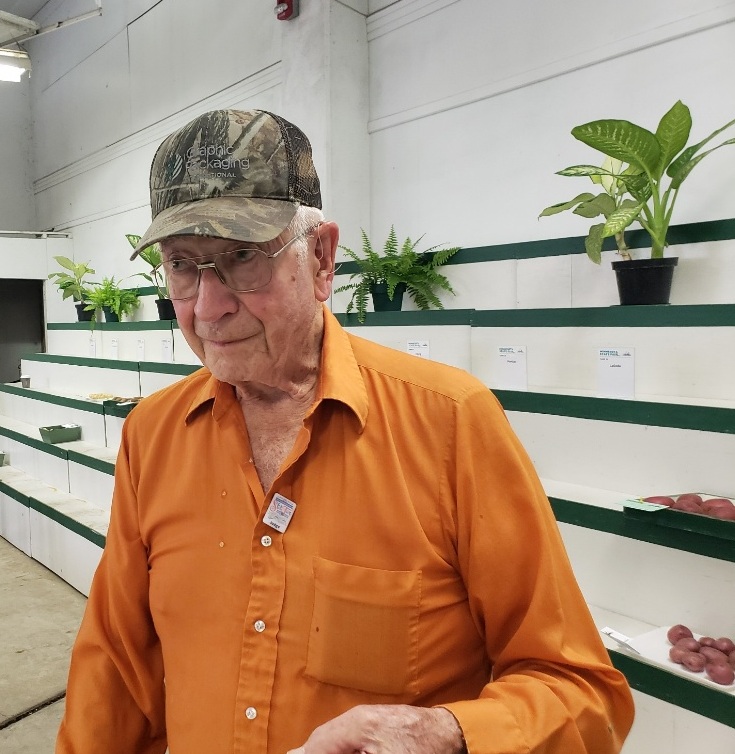
Back in the Field
I came to know that side of Florian personally after Christian Thill’s unexpected death in 2014. At the time, experimental potato material was already growing in the field, including large populations from my research on biochemical markers and processing quality. With limited resources, only a fraction of the material could be retained for further evaluation.
Florian had been retired for nearly two decades, yet he agreed to help. He walked the rows with me, helped evaluate selections, participated in harvest, and brought to those decisions the eye of someone who had spent a lifetime looking at potato plants and tubers. Over time, our professional relationship developed into a friendship.
One selection that drew our attention was MN13142, later named Elk River Russet. Florian became closely involved in its evaluation. He helped connect the work with commercial growers, and together we visited trial fields in Minnesota and North Dakota over several years. We dug plants, examined tubers, compared observations, and discussed what the clone might offer. He also evaluated tubers in his own basement and, in 2017, planted nine hills of MN13142 in his backyard.
Florian remained engaged as the clone was shown and discussed within the broader potato community, including the Potato Association of America meetings. His involvement is one reason I felt strongly that he should be included among the authors when the scientific history of Elk River Russet was documented. His contribution reflected years of field observations, grower interactions, evaluation, and genuine intellectual engagement.
MN13142 is only a small chapter in Florian’s much larger career. Its place in this birthday story is simply that it reveals something essential about him: long after retirement, he was still willing to walk a potato field, take experimental tubers home, test what he saw for himself, and keep asking what could be learned.
At 98
At 98, Florian Lauer’s legacy can be seen in the cultivars he helped develop, the genetic resources he helped bring into breeding, the tissue culture and seed production practices he helped advance, the students he trained, the growers he served, and the scientific community to which he gave decades of leadership and service.
It can also be seen in something less easily measured: sustained curiosity. Nearly two decades after retirement, Florian still traveled to commercial fields, dug potatoes, evaluated experimental material, and talked with younger scientists and growers about what they were seeing.
That may be the most fitting way to understand his career. Potato breeding was his profession, but the potato community became part of his life. Ninety-eight years after that life began near a small Minnesota town, his influence remains visible in the science, the industry, and the people who continue to build on the work he helped establish.
Happy 98th birthday, Florian. Thank you for a lifetime of science, service, friendship, and devotion to the potato community.